
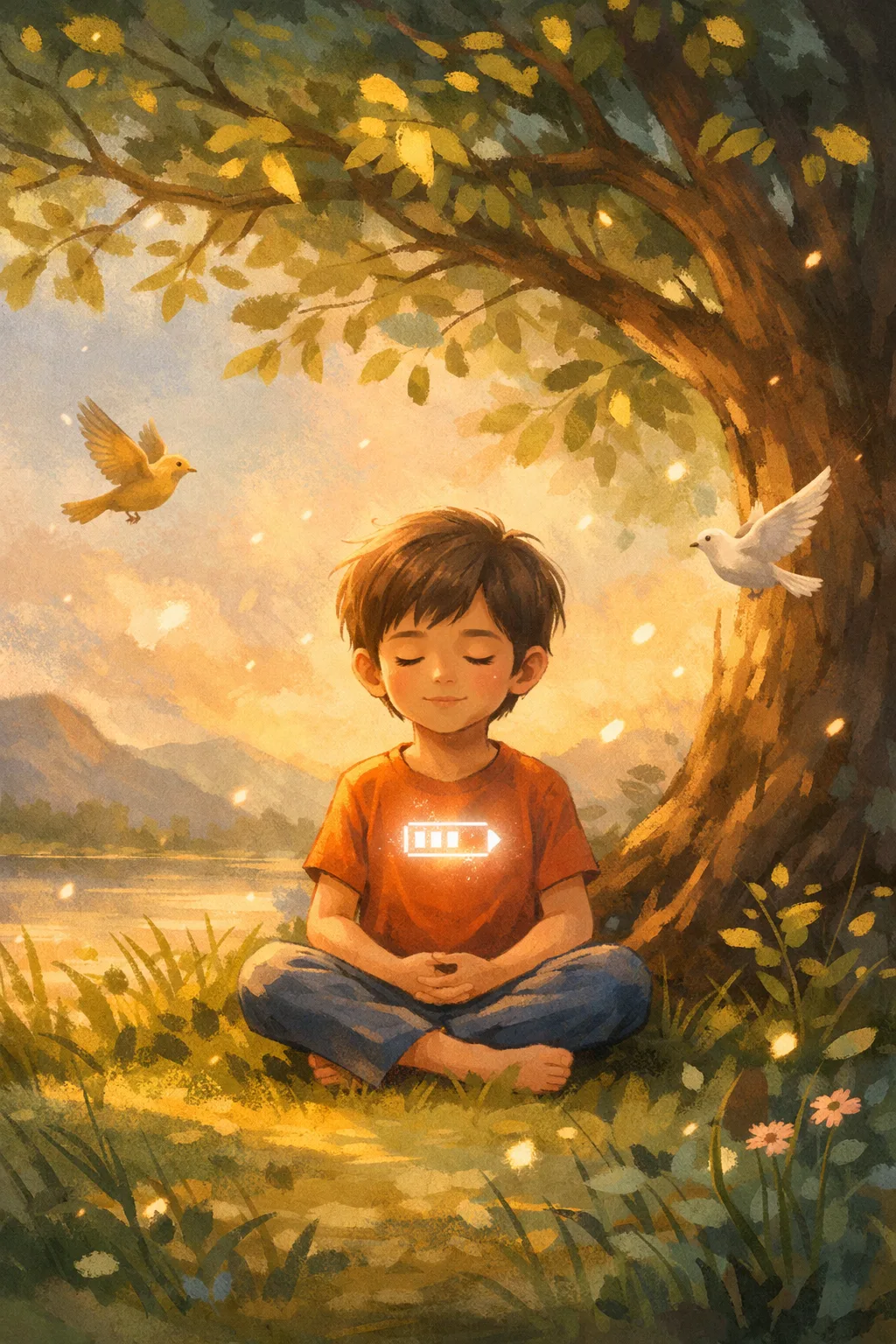
Helping kids take a small pause in a loud, chaotic world…
Today’s children are growing up fluent in screens, shortcuts, and speed. They can unlock phones before they can tie their shoelaces, skip ads without blinking, and debate like tiny lawyers in a courtroom drama. But when the noise fades and real feelings arrive like anger, jealousy, fear, and loneliness, many children stand there without a map. I believe children know how to swipe away problems on a screen, but not how to sit with a heavy feeling in their hearts.
In a world that’s constantly teaching children how to upgrade their skills, we’re forgetting to help them upgrade their inner world. This isn’t about raising perfectly obedient or religious kids. It’s about raising children who feel safe inside their own minds—who know how to pause, feel, connect, and return to calm when the world gets loud.
This is exactly where spirituality begins to matter.
Not religion. Simply, spirituality.
Spirituality gives children simple inner tools to face anger, fear, jealousy, and loneliness without feeling overwhelmed by them. It helps them build resilience from the inside, so emotions become something they can understand, not something they have to run from.
And as parents, this is our quiet responsibility—to introduce them to spirit-uality:
spirit — the inner life, their feelings, their aliveness, their sense of being,
uality — the quality of how they relate to that inner world.
In teaching spirituality, we’re not giving children beliefs to carry. We’re giving them a safe place within themselves to come home to.
On the other hand, religion often arrives as a structure — words to repeat, rules to follow, places to visit. It lives mostly outside the child. However, spirituality lives inside them. It is the quiet language of emotions, the soft awareness of one’s own breath, the sense of being connected to something larger than a screen or a moment of anger.
Spirituality doesn’t ask a child to believe before they are ready. It invites them to feel before they are taught.
It teaches a child to notice what is happening within —
– the tightness in the chest when they’re hurt,
– the warmth when they’re kind,
– the calm that comes after a deep breath,
– the wonder that rises when they look at the sky and realize the world is much bigger than their worries.
This kind of spirituality doesn’t create fear of being watched. It creates safety in being understood.
It doesn’t say, “Be good or else.”
It gently asks, “What are you feeling right now?”
And when children learn to sit with their feelings instead of running from them, something beautiful happens. They begin to trust themselves. They learn that their inner world is not a dangerous place to avoid, but a home they can return to whenever life feels confusing, loud, or overwhelming.
Religion often tells a child what to believe. Spirituality helps a child understand what they are feeling. Our goal as parents shouldn’t just be to make children pray out of fear. Our goal should be to help them feel safe inside their own mind. So, instead of teaching God as a rule, it becomes more meaningful to teach them connection — connection with their thoughts, emotions, nature, kindness, and the quiet voice inside them.
As parents, we should focus on the following:
1. Don’t start with prayer — Start with conversation
Instead of asking children to repeat fixed prayers every night, try a small bedtime ritual.
Ask: “What was the nicest part of your day?”
Then gently say: “Let’s thank life for that.”
No rituals required.
No language barriers.
No pressure to “do it correctly.”
Just a moment of gratitude.
Something interesting often happens. Children begin to feel that their thoughts matter.
Sometimes they even say, “I feel like someone hears me when I say thank you.”
That is spirituality arriving quietly… without being taught.
2. Let nature do the teaching
Children don’t always connect to temples, but they always connect to nature.
A simple habit works wonders like a few minutes outdoors in the evening.
Watching the sunset. Noticing the breeze. Listening to birds.
You can casually point out: “Look how the sun shows up every day without fail… and trees keep giving us air without asking anything.”
There’s no need to explain God. Just let them feel.
Spirituality begins when a child senses and feels: “I am part of a much bigger world.”
Not when they memorize lines they don’t understand.
3. Replace lectures with questions
When children misbehave, our instinct as a parent is to correct using fear or authority.
Instead of: “God won’t like this.”
Try: “How did you feel after shouting?”
Most children immediately say… “bad,” “heavy,” or “strange.”
That feeling is important. That is their inner compass.
Explaining conscience through emotion is far more powerful than explaining morality through rules. Children understand feelings much faster than philosophy.
4. A one-minute pause (the kid’s version of meditation)
Children resist the word meditation. But they love games.
Call it “superhero breathing.” Ask them to close their eyes for a few moments and just listen to their breath.
You can explain: “Your brain is like a phone. If you never charge it, it freezes.”
Soon, children begin using it on their own — before exams, after fights, or when overwhelmed. That small pause is real spiritual practice: awareness without pressure.
5. Tell stories, not sermons
Children don’t connect with doctrine. They connect with characters. So spiritual figures can be introduced through human qualities:
Krishna — A loyal friend who protected others
Guru Nanak — A traveller who believed everyone is equal
Shiv — Calm even in chaos
Jesus — The epitome of kindness
Buddha — A seeker of truth who taught the path to inner peace
When spirituality becomes a story, children don’t feel instructed, they feel inspired. And inspiration stays longer than instruction.
What Is Best Avoided
Many adults unintentionally create fear by using statements like:
• “God will punish you”
• “God is watching
• “Something bad will happen if you don’t pray”
These may create obedience, but not inner connection. Over time, children either reject belief completely or grow up with silent guilt and anxiety. Neither is spirituality.
What Changes You May Notice
Children won’t suddenly become saints. They will still: play games, argue, forget homework. But slowly, something will shift inside them. They begin to say thank you without reminders. They pause when upset. They talk about feelings. They show empathy faster. They calm down quicker after anger. And that is the real sign. Spirituality isn’t about making a child religious. It’s about helping a child become emotionally anchored — someone who knows how to return to peace even in a noisy world. That is a blessing they carry for life
Written By:
Simran J. Bal